
NEURAL-SWARM INTERFACE
Externalising internal brain states using a swarm of robots.
After working with emotion recognition models within my practice (visual, text and audio) , I found contention between these standard computer vision models and contemporary neuroscience theories about emotions. Specifically, while integrating OpenCV emotion recognition libraries, I realised inferring internal mental states from facial expressions has limitations.
Additional research into Lisa Feldman Barrett’s theory of constructed emotion (TCE) showed me that my system relied on contested discrete classifications of emotions. This research explores the TCE and the role of allostasis in the construction of emotions. I believe this may also offer a stable foundation for designing adaptive neural interfaces while moving away from discrete classifications of emotion.
This project focused on designing a closed-loop ‘neural–swarm’ response system.
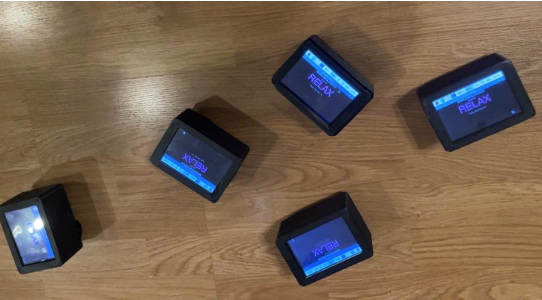
By linking attentional focus levels to swarm movement, I explored how a robot swarm can physically represent aspects of affect to create a visual bridge between neural activity and robotic swarm dynamics.
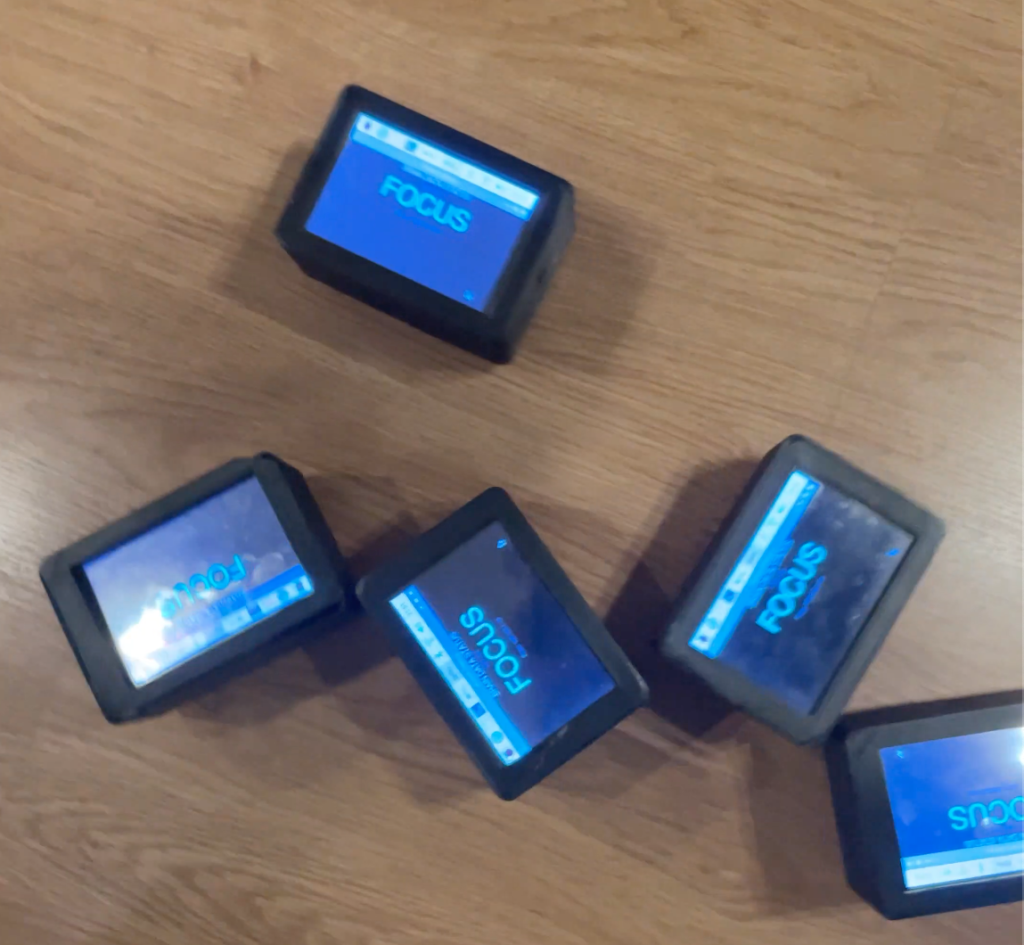
FOCUSED (aggregate)
RELAXED (separate)
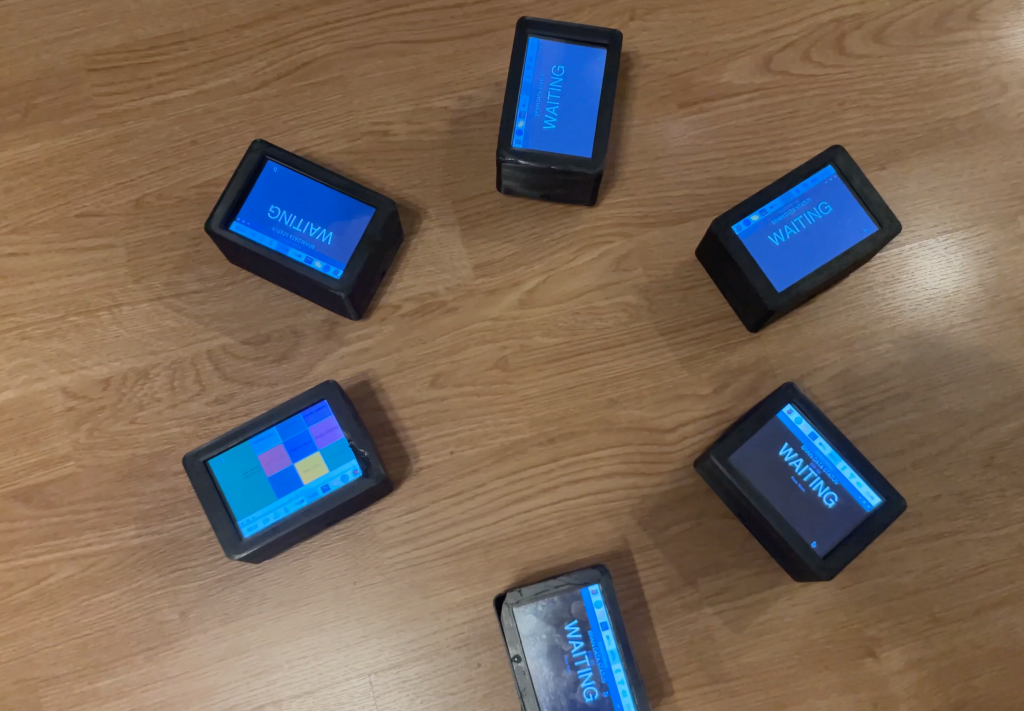
Connecting via UDP to central server
The architecture links bio-signal acquisition from a four-channel EEG wearable to a central server via embedded BLE. The pipeline utilises the Lab Streaming Layer (Python LSL) for real-time buffering, and I implemented neural signal processing (using Welch’s method for Power Spectral Density) to extract alpha and beta band powers. These features drive a machine learning workflow using PCA for dimensionality reduction, simulating aspects of affect and distributing low-latency commands (via UDP) to six decentralised robots.
To validate the control logic, I developed a computational model in MATLAB/Simulink, simulating swarm dynamics where interaction strength varies as an inverse-square law to ensure stability.
I have drawn on recent reviews of the ‘Mind-Machine’ gap to investigate how externalising internal brain activity into physical swarm behaviours can create new EEG biofeedback loops (with strict ethical frameworks surrounding Brain-Swarm Interfaces in place). Further work on this project would focus on the potential therapeutic application of this work and the neuro-data privacy that needs to be in place.